
Johann Sebastian Bach
Befiehl du deine Wege BWV 272
Johann Sebastian Bach
Befiehl du deine Wege BWV 272
- Besetzung Ensemble
- Komponist Johann Sebastian Bach
- Herausgeber Hans Abrahamsen
- Ausgabe Noten
- Verlag Edition Wilhelm Hansen
- Bestell-Nr. KP01266
 Lieferzeit 2-4 Wochen

Beschreibung:
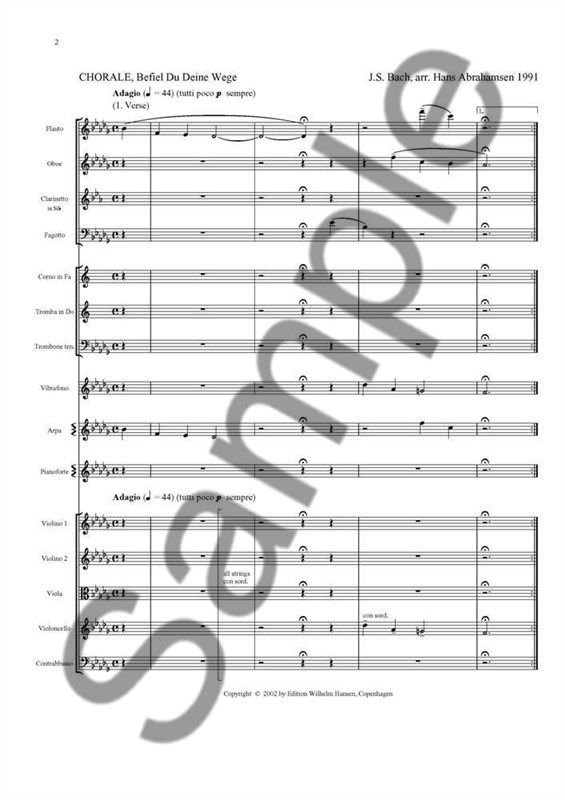
A Chorale arranged for 15 Instruments. Full Score for ensemble.
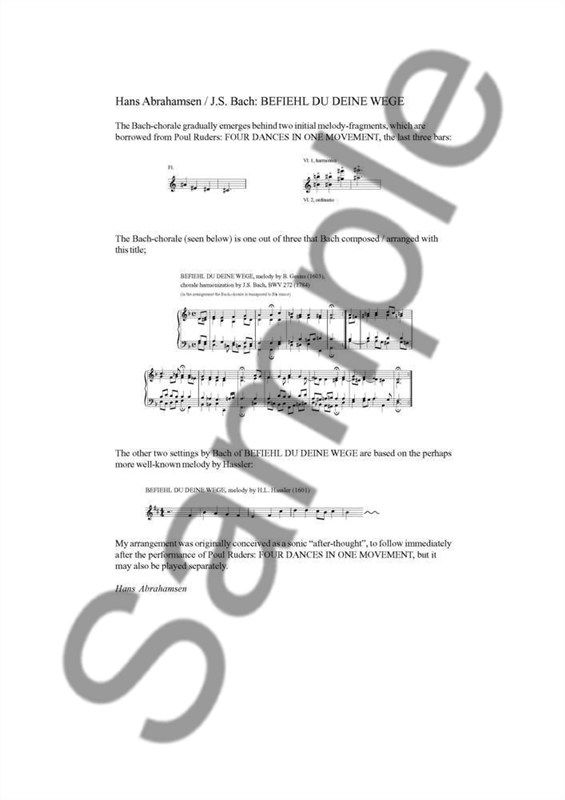
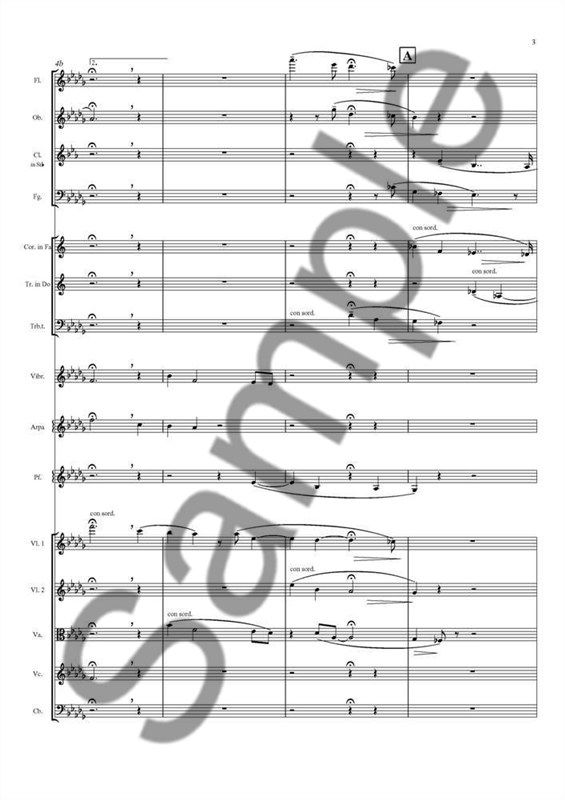
Bach's Befichl du deine Wege is a chorale setting (BWV 272), which Hans Abrahamsen has arranged for fifteen instruments. In Hans Albrahamsen's adaptation Bachs chorale gradually ernerges from two melodic fragments, both borrowed from the Danish composer Poul Ruders' Four Dances in One Movernent'. In fact both fragments are taken from the last three bars of Ruders' composition. One of Ruders' small melodies is descending, the other is ascending. The metamorphosis from Ruders to Bach can be accomplished because both of Ruders' melodic fragments are in fact 'hidden' among the parts of this Bach chorale inasmuch as the composer has transposed it into B minor. In the first verse we hear only the descending Ruders melody. In the secend verse Ruders' second, ascending and chrornatically coloured melody is added. In the subsequent verses more and more melodies are added. Thus the piece begins with Poul Ruders' melodic fragment in the foreground. In the course of the next verse Ruders' material gradually recedes into the background, and permits Bachs face to ernerge with increasing clarty in the foreground. The piece is dedicated to Poul Ruders.
- Thomas Michelsen
Arrangement
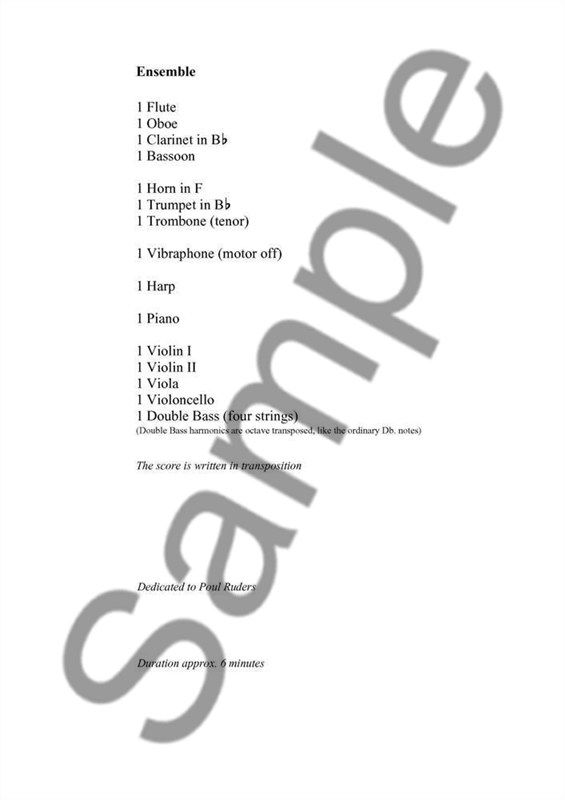
> 1 Flute
> 1 Oboe
> 1 Clarinet In Bb
> 1 Bassoon
> 1 Horn in F
> 1 Trumpet in Bb
> 1 Trombone (Tenor)
> 1 Vibraphone (Motor Off)
> 1 Harp
> 1 Piano
> 1 Violin I
> 1 Violin II
> 1 Viola
> 1 Cello
> 1 Double Bass
Bach's Befichl du deine Wege is a chorale setting (BWV 272), which Hans Abrahamsen has arranged for fifteen instruments. In Hans Albrahamsen's adaptation Bachs chorale gradually ernerges from two melodic fragments, both borrowed from the Danish composer Poul Ruders' Four Dances in One Movernent'. In fact both fragments are taken from the last three bars of Ruders' composition. One of Ruders' small melodies is descending, the other is ascending. The metamorphosis from Ruders to Bach can be accomplished because both of Ruders' melodic fragments are in fact 'hidden' among the parts of this Bach chorale inasmuch as the composer has transposed it into B minor. In the first verse we hear only the descending Ruders melody. In the secend verse Ruders' second, ascending and chrornatically coloured melody is added. In the subsequent verses more and more melodies are added. Thus the piece begins with Poul Ruders' melodic fragment in the foreground. In the course of the next verse Ruders' material gradually recedes into the background, and permits Bachs face to ernerge with increasing clarty in the foreground. The piece is dedicated to Poul Ruders.
- Thomas Michelsen
Arrangement
> 1 Flute
> 1 Oboe
> 1 Clarinet In Bb
> 1 Bassoon
> 1 Horn in F
> 1 Trumpet in Bb
> 1 Trombone (Tenor)
> 1 Vibraphone (Motor Off)
> 1 Harp
> 1 Piano
> 1 Violin I
> 1 Violin II
> 1 Viola
> 1 Cello
> 1 Double Bass