
Nico Muhly
It Goes Without Saying
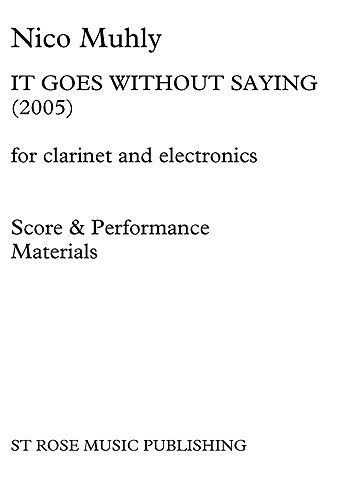
Nico Muhly
It Goes Without Saying
- Besetzung Klarinette und Elektronik
- Komponist Nico Muhly
-
Schwierigkeit
- Ausgabe Noten
- Verlag St. Rose Music Publishing
- Bestell-Nr. SRO100017
 Lieferzeit 3-6 Arbeitstage
inkl. MwSt.,
zzgl. Versand
Nicht in allen Ländern verfügbar. Mehr erfahren

Beschreibung:
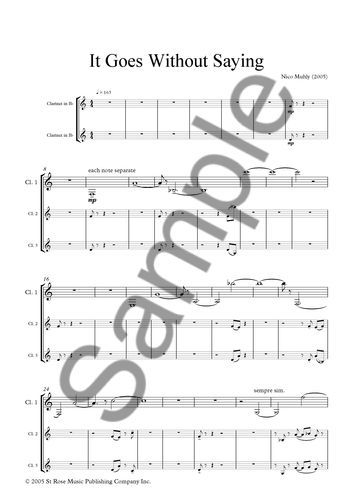
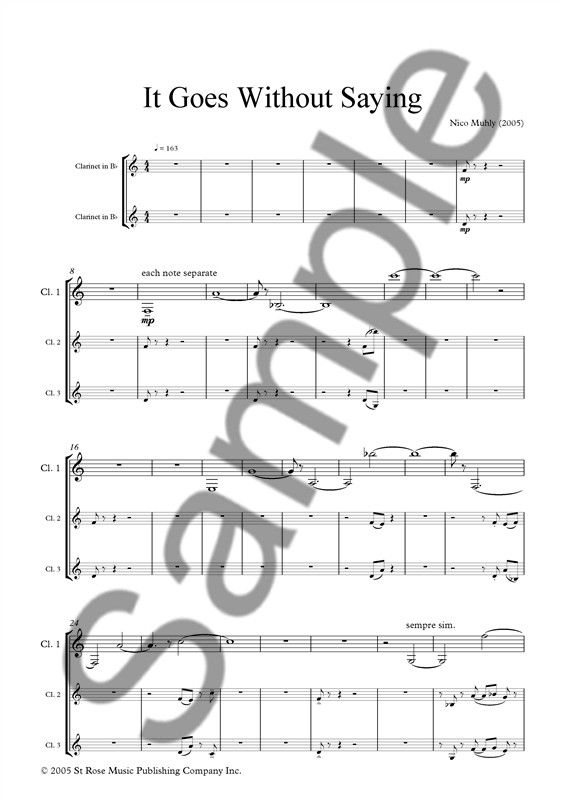
For a piece with such a strong electronic component, 'It Goes Without Saying' is surprisingly organic. While the electronics include chillier, metallic noisesラsamples ranging from a kitchen whisk to a unique set of tiny bellsラmost prominent are the warm, woody sounds of a harmonium and of clicking clarinet-keys, sounds that share a certain sonic DNA with the live components of the performance. The piece also develops according to organic principles. Over the initial drone of the harmonium, the rhythm track and the clarinets build the material of the piece up from small, replicating cells into a lively and elaborate texture. The minutely wrought surface is stretched over the simplest possible formal contour, the drone undergirding the piece progressing from C to F and back again. When the slowly building dissonance of the underlying harmonium chord finally reaches its tipping point, the resolution corresponds to a dramatic timbral shock: a shocking burst of industrial noise, dominating rather than complementing its acoustic surroundings. Finally, the machine noises die away and the harmonies return home, the texture warms once againラnow leavened by the gentle sound of the celesta. -Program Notes ᄅ 2007 Daniel Johnson
Performance Notes: The clarinet should be placed in the center of the stage. If amplification is used (which is not necessary but can help solve certain balance issues), it is recommended that there be one microphone traditionally placed, and another close to the side of the instrument, gently amplifying the natural sound of the keys clicking.
Performance Notes: The clarinet should be placed in the center of the stage. If amplification is used (which is not necessary but can help solve certain balance issues), it is recommended that there be one microphone traditionally placed, and another close to the side of the instrument, gently amplifying the natural sound of the keys clicking.
Kunden bewerteten diesen Artikel:
Herstellerinformationen:
St. Rose Music Publ.
Oranienburger Str. 17
10178
Berlin
Deutschland
Andere Kunden kauften auch:

Arthur Honegger
- Klarinette in A und Klavier
- Noten
-
Lieferzeit 2-4 Arbeitstage