
Carlos Ezequiel
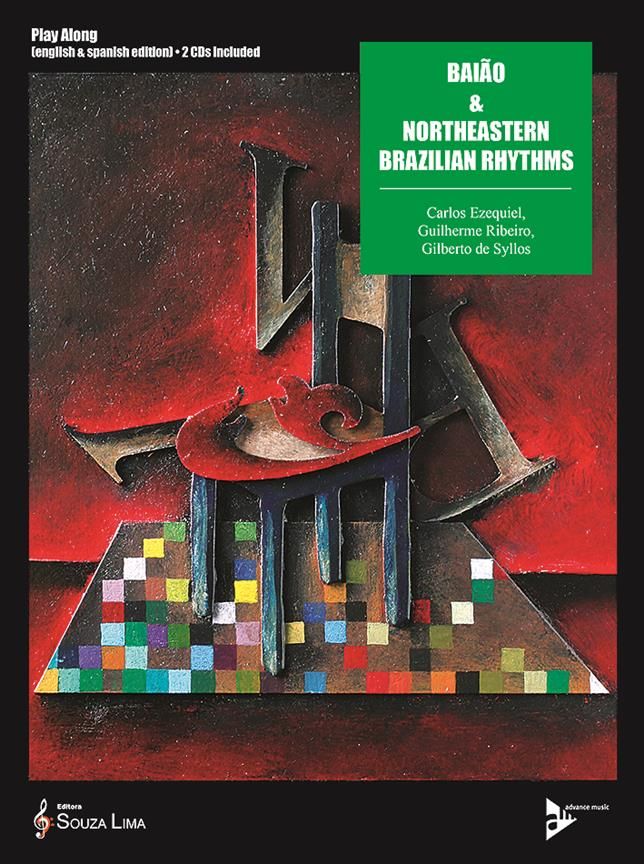
Baião & Northeastern Brazilian Rhythms
Demo
anhören
PDF
ansehen
Carlos Ezequiel
Baião & Northeastern Brazilian Rhythms
- Besetzung Improvisation
- Komponist Carlos Ezequiel
- Ausgabe Buch und CD
- Verlag Advance Music
- Bestell-Nr. ADV18010
 auf Lager
Lieferzeit 1-3 Arbeitstage
inkl. MwSt.,
zzgl. Versand
Nicht in allen Ländern verfügbar. Mehr erfahren

Beschreibung:
The focus of this series is on the language of instrumental music
nowadays performed in Brazil, based on elements of modern
improvisation. Each volume contains two CDs with seven pieces of music, which are presented in the following versions:
1. Complete takes - in other words, the full versions of the
pieces included in the book, which are performed by all the instruments playing simultaneously;
2. Without melody / solo part - so that the melodic instruments
can play along with the recording, executing their own interpretationsand practicing improvisations;
3. Without harmony - so that the harmonic instruments can
practice the language of accompaniment, especially with regard to the rhythmic vocabulary of each style.
4. Without bass - so that the bassists can practice their traditional task of accompaniment while working on the rhythmic but also the
harmonic aspects;
5. Without drums - so that the drummers can practice the rhythms
characteristic of each piece of music but also create their own
variations.
Each book contains the scores in the form of lead sheets in four
different versions: in C, Bb, Eb, and bass clef. Due to the widely
defined concept of this method, it is important to point out that
musicians playing transposing instruments might have to make adaptions when reading the scores. Wind instrumentalists are at liberty to
carry out adjustments whenever these are called for in order to
facilitate the musical execution.
nowadays performed in Brazil, based on elements of modern
improvisation. Each volume contains two CDs with seven pieces of music, which are presented in the following versions:
1. Complete takes - in other words, the full versions of the
pieces included in the book, which are performed by all the instruments playing simultaneously;
2. Without melody / solo part - so that the melodic instruments
can play along with the recording, executing their own interpretationsand practicing improvisations;
3. Without harmony - so that the harmonic instruments can
practice the language of accompaniment, especially with regard to the rhythmic vocabulary of each style.
4. Without bass - so that the bassists can practice their traditional task of accompaniment while working on the rhythmic but also the
harmonic aspects;
5. Without drums - so that the drummers can practice the rhythms
characteristic of each piece of music but also create their own
variations.
Each book contains the scores in the form of lead sheets in four
different versions: in C, Bb, Eb, and bass clef. Due to the widely
defined concept of this method, it is important to point out that
musicians playing transposing instruments might have to make adaptions when reading the scores. Wind instrumentalists are at liberty to
carry out adjustments whenever these are called for in order to
facilitate the musical execution.
Kunden bewerteten diesen Artikel:
Herstellerinformationen:
Advance Music
Weihergarten 5
55116
Mainz
Deutschland
Andere Kunden kauften auch:
Lupa Santiago
- Improvisation
- Noten und CD
-
Lieferzeit 2-5 Arbeitstage
Guilherme Ribiero
- Improvisation
- Noten und CD
-
auf Lager
Lieferzeit 1-3 Arbeitstage

Antonio Adolfo
- Improvisation
- Noten und CD
-
auf Lager
Lieferzeit 1-3 Arbeitstage