
Olivier Messiaen
Des Canyons Aux Etoiles Vol. 2
VI-VII
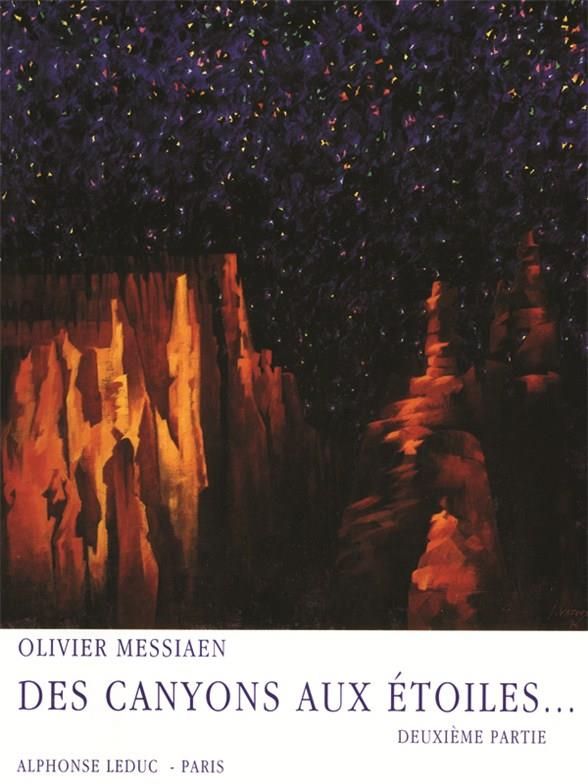
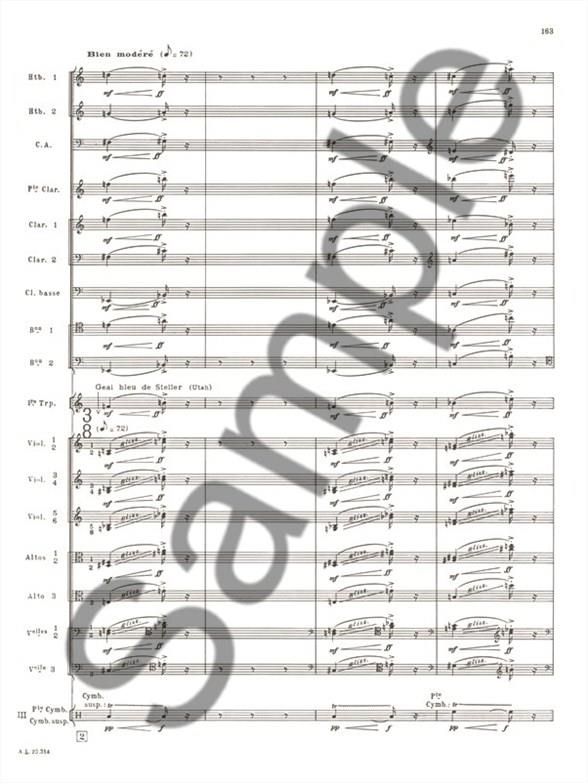
Olivier Messiaen
Des Canyons Aux Etoiles Vol. 2
VI-VII
- Besetzung Horn, Percussion, Glockenspiel, Klavier und Orchester
- Komponist Olivier Messiaen
- Ausgabe Partitur
- Verlag Alphonse Leduc
- Bestell-Nr. AL25314
 Lieferzeit 3-6 Arbeitstage
inkl. MwSt.,
zzgl. Versand
Nicht in allen Ländern verfügbar. Mehr erfahren

Beschreibung:
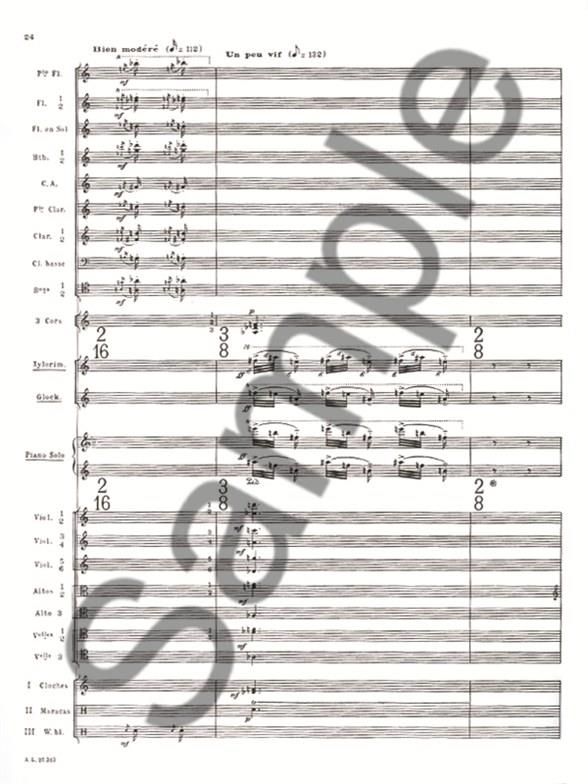
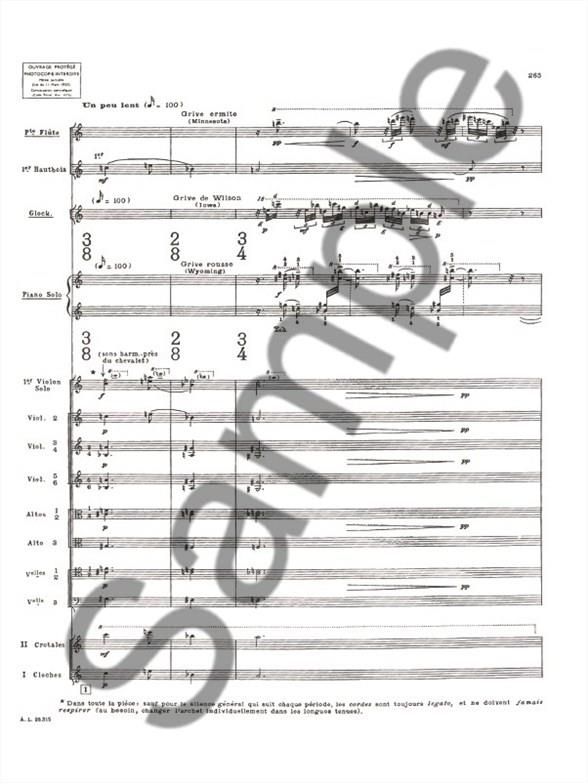
Piano solo, Cor, Xylorimba, Glockenspiel, Orchestre - Partition
Des Canyons Aux Étoiles - Part 2 is the second part of this twelve-movement orchestral work by Olivier Messiaen. It features the movements VI and VII.
This score wascommissioned by Alice Tully for the celebration of the bicentenary of the USA Declaration of Independence, and the whole piece lasts between 90 and 100 minutes.
Messiaen got inspiration from sounds and colours and histravel to America, highlighted by the Bryce Canyon, very colourful, really influenced his composition.
Olivier Messiaen (1908-1992) was a French organist and composer who was passionate about Ornithologyandone of the most important composers of his century. Inspired by Japanese music, he had a very special way of composing and his work can be identified by its complexity, its diatonic aspect, its harmony with limitedtransposition, its colour and its additive rhythms. He composed many works related to ornithology and birdsong, including the Bird Catalogue in 7 volumes and the Treatise on rhythm, colour and ornithology in 7 volumes.
Des Canyons Aux Étoiles - Part 2 is the second part of this twelve-movement orchestral work by Olivier Messiaen. It features the movements VI and VII.
This score wascommissioned by Alice Tully for the celebration of the bicentenary of the USA Declaration of Independence, and the whole piece lasts between 90 and 100 minutes.
Messiaen got inspiration from sounds and colours and histravel to America, highlighted by the Bryce Canyon, very colourful, really influenced his composition.
Olivier Messiaen (1908-1992) was a French organist and composer who was passionate about Ornithologyandone of the most important composers of his century. Inspired by Japanese music, he had a very special way of composing and his work can be identified by its complexity, its diatonic aspect, its harmony with limitedtransposition, its colour and its additive rhythms. He composed many works related to ornithology and birdsong, including the Bird Catalogue in 7 volumes and the Treatise on rhythm, colour and ornithology in 7 volumes.
Kunden bewerteten diesen Artikel:
Herstellerinformationen:
Hal Leonard Europe B. V.
Businesspark Friesland-West 15
8447
SL Heerenveen
Niederlande
Andere Kunden kauften auch:
- Horn, Percussion, Glockenspiel, Klavier und Orchester
- Partitur
-
Lieferzeit 3-6 Arbeitstage
- Horn, Percussion, Glockenspiel, Klavier und Orchester
- Partitur
-
Lieferzeit 3-6 Arbeitstage
- Horn und Klavier
- Klavierauszug und Stimme(n)
-
auf Lager
Lieferzeit 1-3 Arbeitstage
- Horn in Es und Klavier
- Noten
-
auf Lager
Lieferzeit 1-3 Arbeitstage - Auch als Download verfügbar!
- Horn und Klavier
- Klavierauszug und Stimme(n) (Urtext)
- Martin Schelhaas
-
auf Lager
Lieferzeit 1-3 Arbeitstage - Auch als Download verfügbar!

- Horn
- Noten
-
auf Lager
Lieferzeit 1-3 Arbeitstage
- Horn und Klavier
- Klavierauszug und Stimme(n)
-
auf Lager
Lieferzeit 1-3 Arbeitstage
- Horn und Klavier
- Klavierauszug und Stimme(n)
-
auf Lager
Lieferzeit 1-3 Arbeitstage
- Horn und Klavier
- Klavierauszug und Stimme(n) (Urtext)
-
auf Lager
Lieferzeit 1-3 Arbeitstage