
Wolfgang Amadeus Mozart
Concerto in G Major KV 313
for Flute and Orchestra
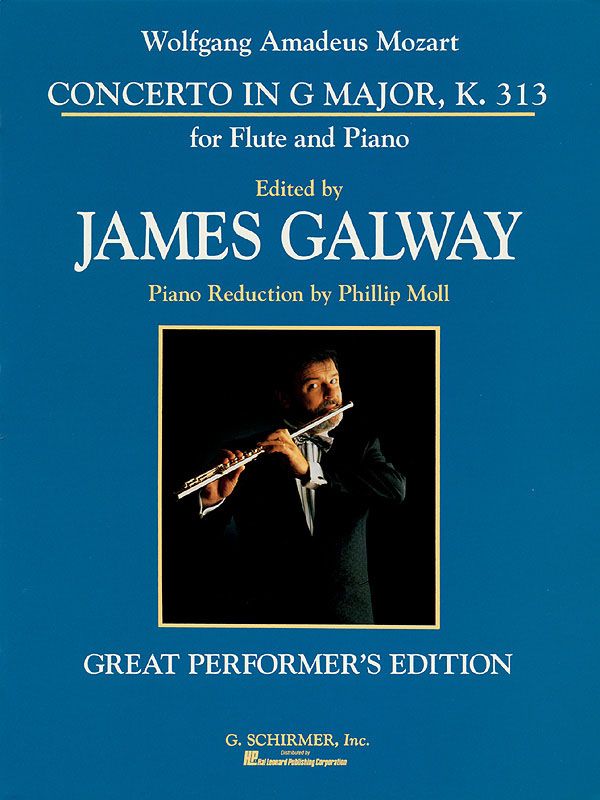
Wolfgang Amadeus Mozart
Concerto in G Major KV 313
for Flute and Orchestra
- Besetzung Querflöte und Klavier
- Komponist Wolfgang Amadeus Mozart
- Serie Woodwind Solo
- Herausgeber Sir James Galway
-
Schwierigkeit
- Ausgabe Klavierauszug
- Verlag G. Schirmer
- Bestell-Nr. GS81087
 Lieferzeit 3-6 Arbeitstage
inkl. MwSt.,
zzgl. Versand
Nicht in allen Ländern verfügbar. Mehr erfahren

Beschreibung:
In a letter dating from 1777 Mozart reported to his father from Mannheim that Johann Baptist Wendling, principal Flautist of the famous Mannheim Orchestra, had been approached by a wealthy Dutch businessman by the name of De Jean, who was prepared to pay 200 gulden for three easy flute concertos and four flute quartets for his own use. Mozart accepted the commission. By the day before the Dutchman left, Mozart had delivered only three of the quartets and two concertos, for which he had been paid 964 gulden. The composer, who was himself being pressed by his father to continue his own journey to Paris with his mother, was full of excuses, writing back to Salzburg on 14 February,
'It is not surprising I have been unable to finish them, for I never have a single hour's quiet here...Moreover, you know I become quite powerless when I am obliged to write for an instrument I can't stand. '
There is more than a hint of disingenuousness in Mozart's words, for this was the height of the period during which he was being distracted from his work by his new-found love for the Mannheim singer Aloysia Weber. (He ultimately married her sister, Constanze.) If Mozart's dislike of the Flute was as great as he claimed, there are few signs in the Flute Concerto No. 1 in G major, particularly in the expressive central Adagio ma non troppo. The outer movements are an Allegro maestoso and a concluding Rondo: Tempo di Menuetto. The work is scored for two oboes (replaced by flutes in the Adagio), two horns, and strings. This Great Performers' Edition is edited by James Galway.
'It is not surprising I have been unable to finish them, for I never have a single hour's quiet here...Moreover, you know I become quite powerless when I am obliged to write for an instrument I can't stand. '
There is more than a hint of disingenuousness in Mozart's words, for this was the height of the period during which he was being distracted from his work by his new-found love for the Mannheim singer Aloysia Weber. (He ultimately married her sister, Constanze.) If Mozart's dislike of the Flute was as great as he claimed, there are few signs in the Flute Concerto No. 1 in G major, particularly in the expressive central Adagio ma non troppo. The outer movements are an Allegro maestoso and a concluding Rondo: Tempo di Menuetto. The work is scored for two oboes (replaced by flutes in the Adagio), two horns, and strings. This Great Performers' Edition is edited by James Galway.
Kunden bewerteten diesen Artikel:
Herstellerinformationen:
Hal Leonard Europe B. V.
Businesspark Friesland-West 15
8447
SL Heerenveen
Niederlande
Andere Kunden kauften auch:

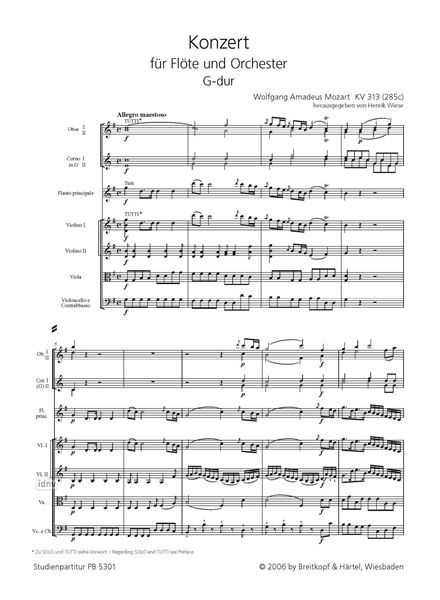
Wolfgang Amadeus Mozart
Breitkopf Urtext - Studienpartitur
- Querflöte und Orchester
- Studienpartitur (Urtext)
-
Lieferzeit 2-5 Arbeitstage
Wolfgang Amadeus Mozart
- Querflöte und Klavier
- Klavierauszug (Urtext)
-
auf Lager
Lieferzeit 1-3 Arbeitstage
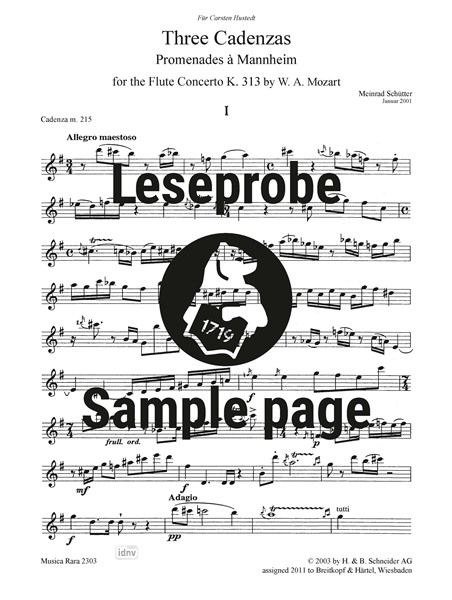
Meinrad Schütter
- Querflöte
- Noten
-
Lieferzeit 2-5 Arbeitstage
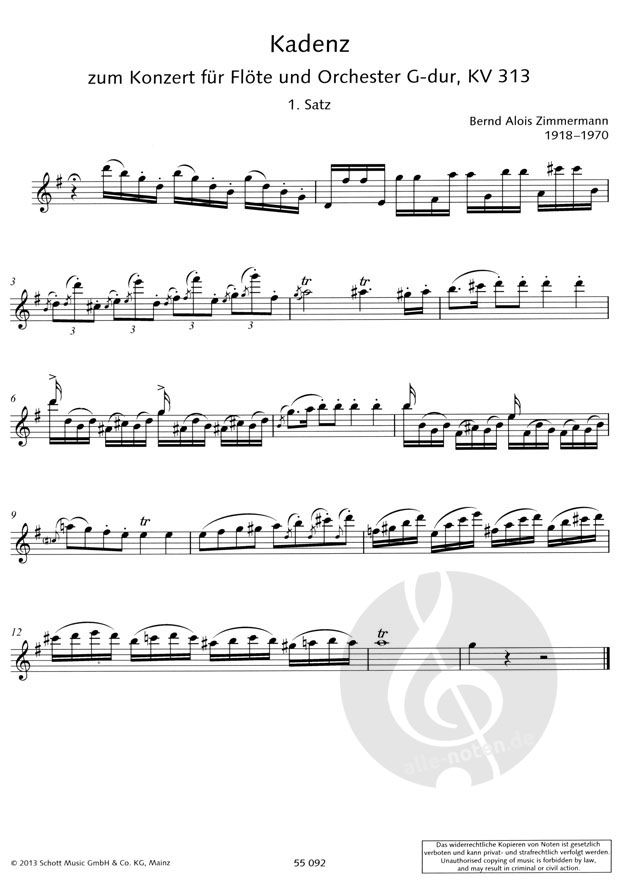
Bernd Alois Zimmermann
Konzerte für Flöte und Orchester G-Dur KV 313 und D-Dur KV 314 von W. A. Mozart
- Querflöte
- Noten
-
auf Lager
Lieferzeit 1-3 Arbeitstage - Auch als Download verfügbar!


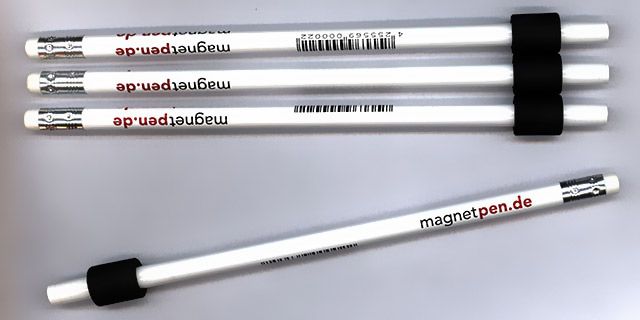
Magnet Pen Bleistift Halter
- Musikzubehör
- Zubehör
-
auf Lager
Lieferzeit 1-3 Arbeitstage